
Wyandotte County Criminal Case Files
Criminal court records in Wyandotte County are maintained through the Criminal Department of the District Court. The research identifies the Criminal Department on the second floor of the Wyandotte County Courthouse, with phone 913-573-2905 and public counter hours that pause from noon to 1:00 p.m. The official criminal page also identifies the criminal divisions that hear local criminal cases, including Divisions 4, 5, 8, 9, and 16.
The official District Attorney page is a key source for the prosecution side of these records.
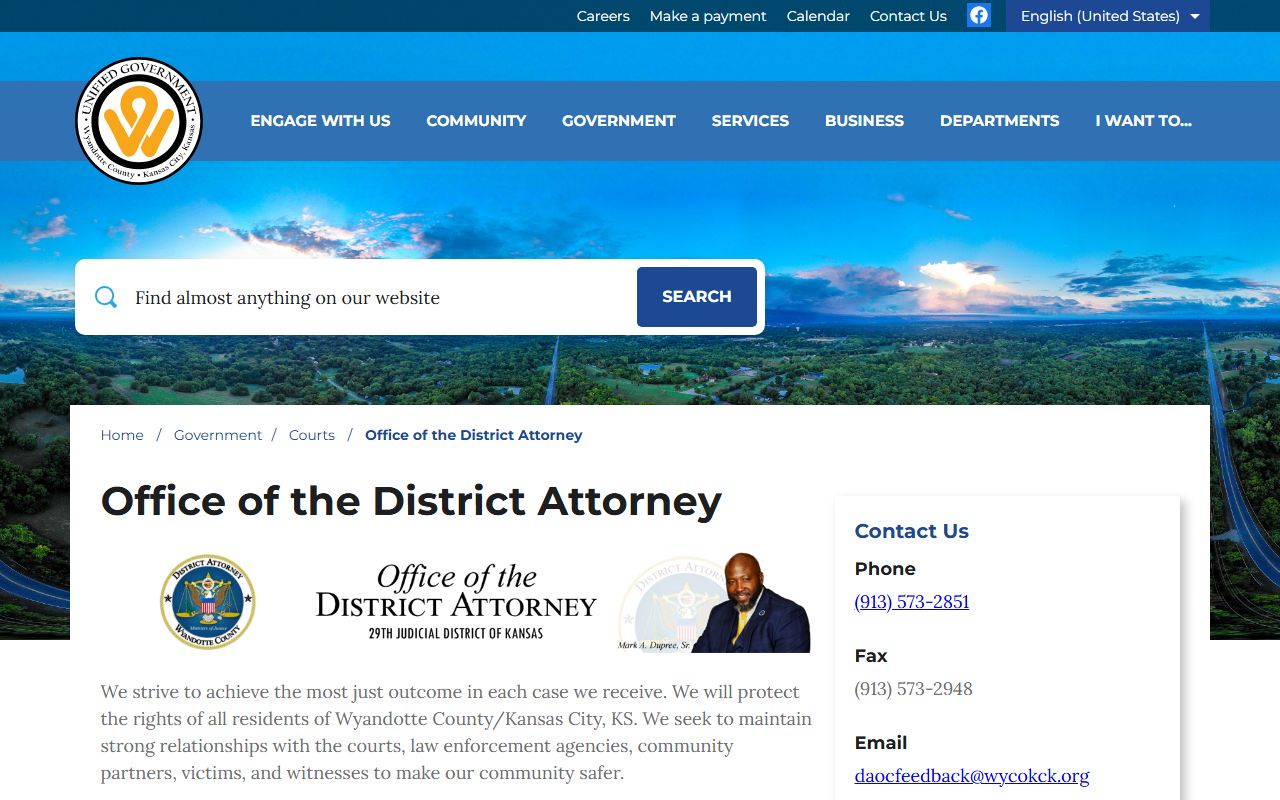
The District Attorney decides what charges to file after arrest and whether counts are amended, dismissed, diverted, or pursued through trial.
A criminal court record is not the same as a booking record. Booking shows custody. The court file shows the legal case: complaint or information, bond orders, arraignment, counsel entries, motions, docket settings, pleas, trial events, disposition, sentencing journal entries, probation terms, restitution, and costs.
Search Wyandotte County Criminal Records
Start with Kansas CaseSearch for public district court case information. Search by case number if known, or use a party name. Confirm the result belongs to Wyandotte County or the 29th Judicial District before relying on the docket. For documents that do not appear online, use the courthouse public terminal on the mezzanine floor or contact the Criminal Department.
The District Attorney Community Integrity Unit page adds important context for post-conviction review in Wyandotte County.
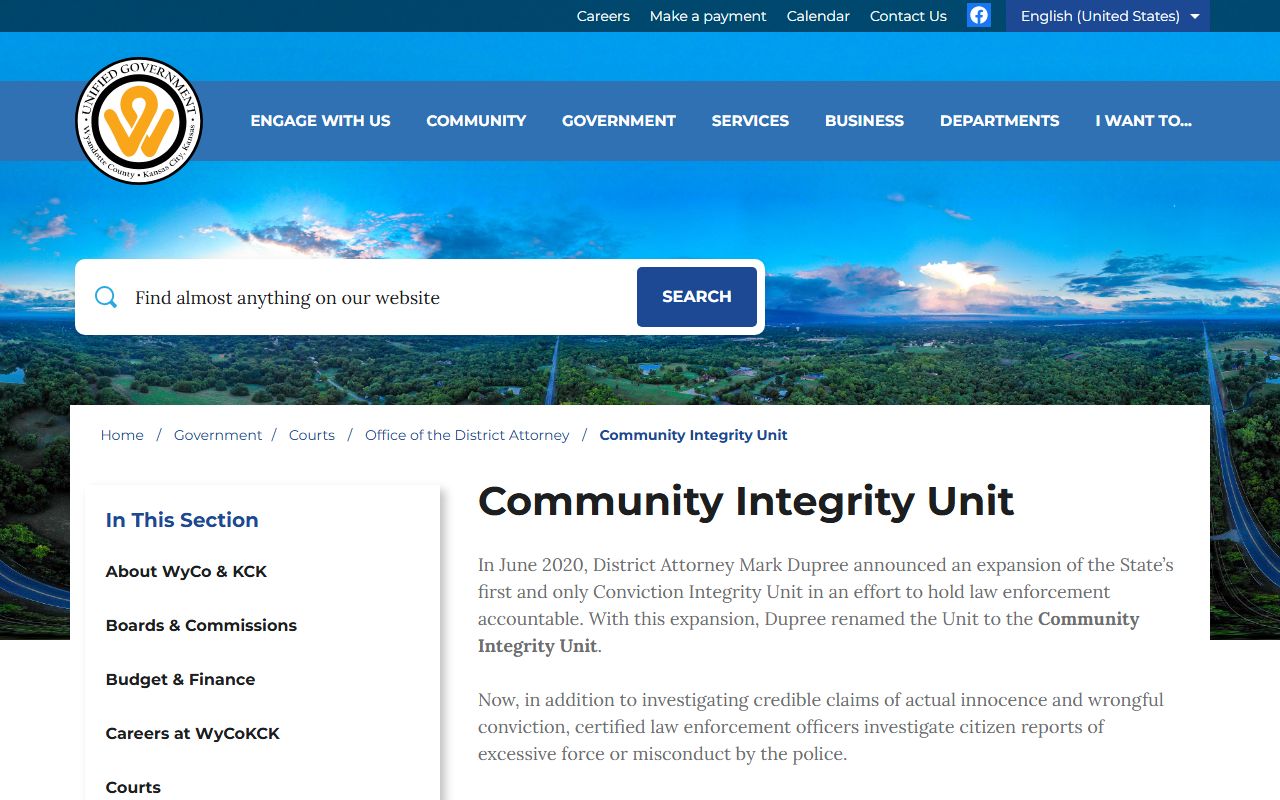
Post-conviction review can create later docket activity in old criminal court records, so older cases may not be static.
- Search CaseSearch by case number, defendant name, business name, or citation when applicable.
- Check the case header for county, case type, filing date, status, and assigned division.
- Read docket events in date order to separate filed charges from later outcomes.
- Use the Criminal Department at 913-573-2905 when a public document is not visible online.
- Use the jail roster only for custody status, not as proof of conviction.
What Criminal Records Show
Wyandotte County criminal court records usually have a case number, caption, defendant name, prosecutor, defense counsel, filing date, case type, status, judge or division, charges, hearing settings, docket events, disposition, sentence, fines, costs, bond entries, warrants, and appeal or post-judgment filings. Kansas examples in the research include compact and hyphenated case-number formats such as 25CR1030 and 2020-CR-1.
| Field | What It Shows |
|---|---|
| Case number | The District Court identifier used for searches, payments, and clerk requests. |
| Charges | The offense counts filed by the prosecutor, including later amendments or dismissals. |
| Plea | Whether the defendant entered guilty, not guilty, no contest, or another recorded plea. |
| Docket events | Chronological filings, hearings, continuances, motions, orders, warrants, and notices. |
| Disposition | The current or final outcome for the case or each charge. |
| Sentence | Jail, prison, probation, restitution, fines, costs, or other court-ordered terms after conviction. |
Case flow: Charges Filed › Arraignment › Pretrial Motions › Plea or Trial › Disposition › Sentencing.
Charges Pleas and Convictions
A filed charge is an allegation in a criminal case. A conviction is an adjudicated result after a plea, verdict, or other court finding. This distinction matters because a Wyandotte County criminal court record may show serious original charges that were later amended, reduced, dismissed, or resolved through diversion.
| Charge | Conviction | |
|---|---|---|
| Meaning | Accusation filed in court | Final finding or plea of guilt |
| Can change | Yes, counts may be amended or dismissed | Can be appealed, vacated, or expunged if law allows |
| Where seen | Complaint, information, docket, jail entry | Disposition and sentencing entries |
Defense and Public Access
The Kansas State Board of Indigents' Defense Services provides counsel through public defender and assigned-counsel systems. The research notes that the 29th Judicial District Public Defender Office in Kansas City began accepting Wyandotte County trial cases on August 12, 2024, with attorneys and staff assigned to local trial work.
The Kansas State Board of Indigents' Defense Services explains the statewide indigent defense role.

Defense counsel entries, motions, continuances, and sentencing filings can all appear in the criminal court docket.
Public access is governed by Kansas Supreme Court Rule 22, KORA policy, and specific restrictions. Juvenile files, sealed or expunged matters, protected identifiers, victim information, and some investigative records can be closed or redacted.
Sealed and Expunged Records
Expungement limits public access to eligible records, but it is not a promise that every agency copy is destroyed. The research cites two core Kansas statutes for criminal records and arrest records.
The K.S.A. 21-6614 expungement statute governs many conviction, arrest-record, and diversion expungements.
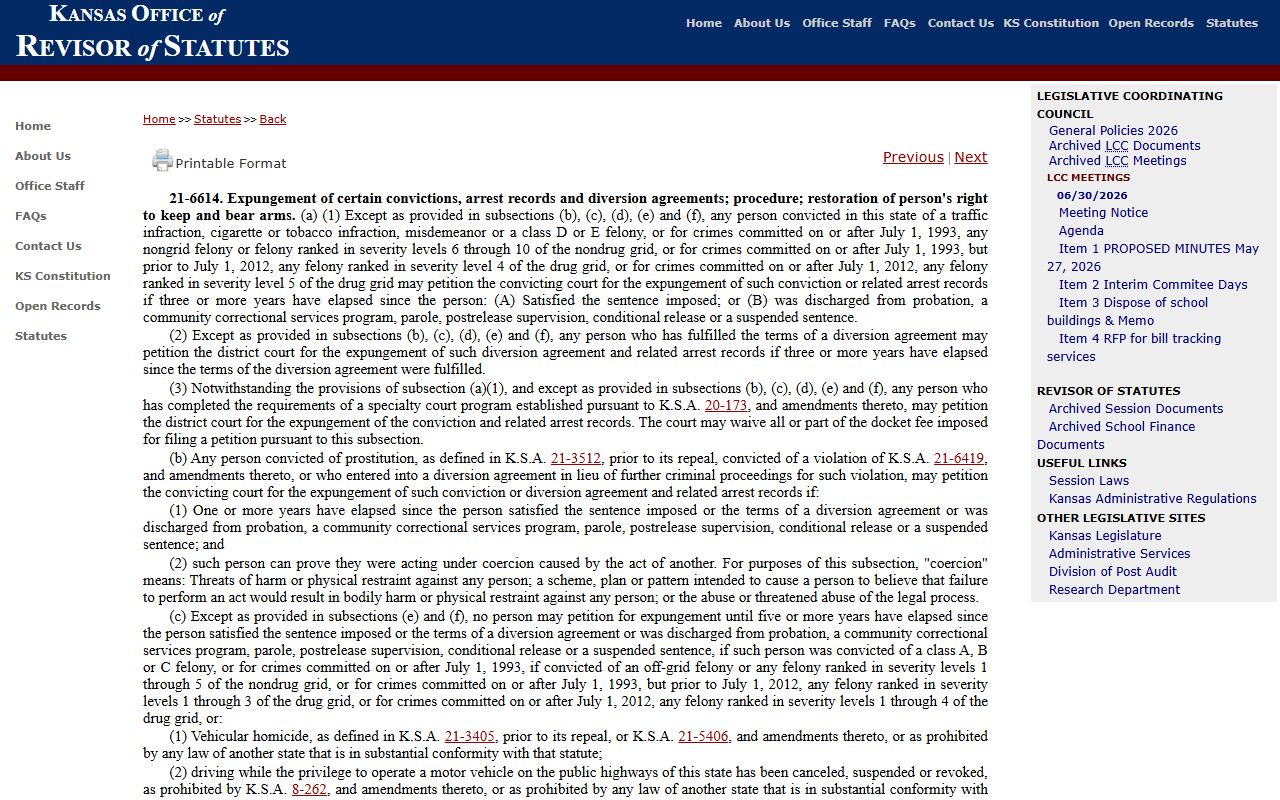
That statute is the better source when the case ended in conviction or diversion and the question is later public access.
The K.S.A. 22-2410 arrest-record expungement statute addresses arrest records.
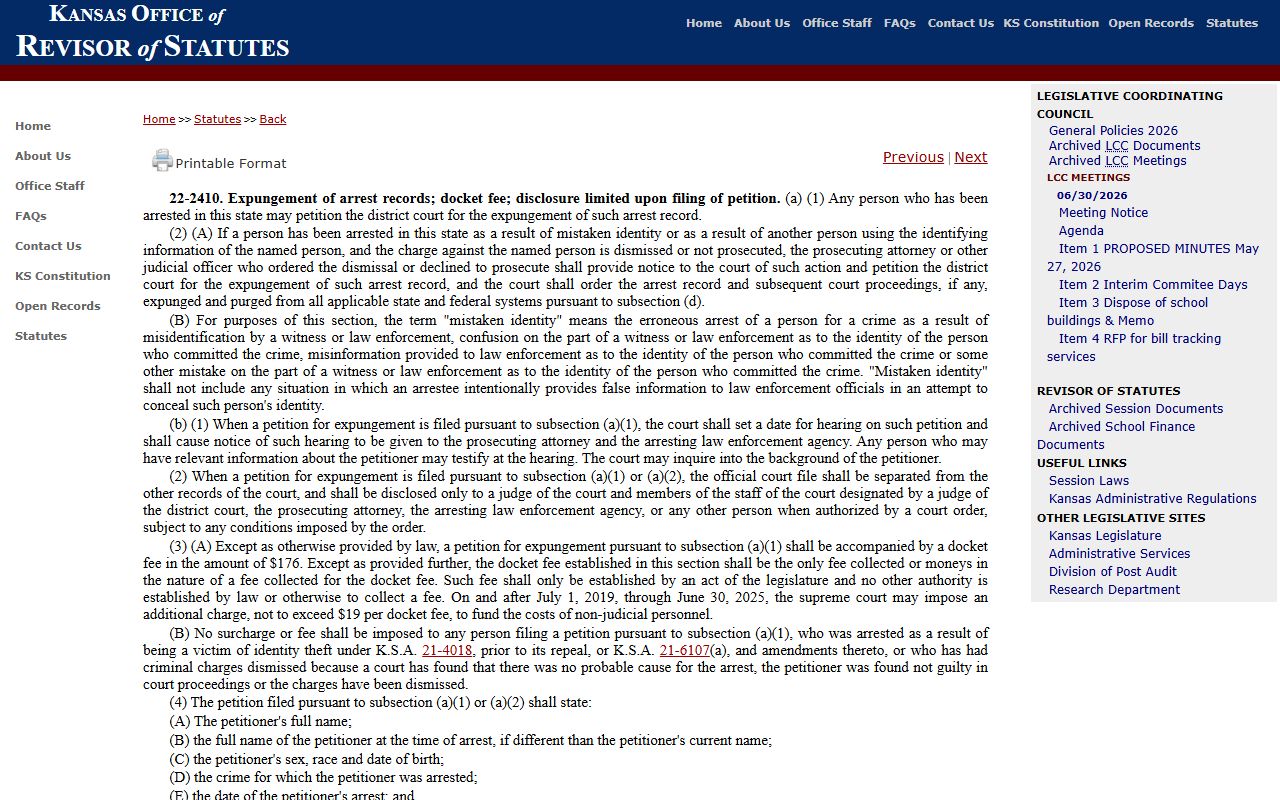
Use the District Court forms index when filing the local petition, because the correct form depends on conviction, diversion, arrest, dismissal, or juvenile status.
| Sealed | Expunged | |
|---|---|---|
| Access effect | Public access is restricted by rule, statute, or order | Public dissemination is limited by expungement order and statute |
| Common examples | Juvenile, adoption, care and treatment, protected identifiers | Eligible convictions, diversions, arrests, or dismissed matters |
| Still available to some agencies | Often yes by law or court order | May remain available to specified criminal justice or licensing entities |
Warrants Bonds and Jail Links
Criminal court records can contain warrant and bond entries, but those entries should be read with care. A bench warrant may appear after a missed hearing. A probation violation warrant may appear after an alleged violation of supervision terms. A bond entry may show cash, surety, personal recognizance, or other release terms, yet the jail roster is still the better source for current custody status.
Wyandotte County criminal records also connect to municipal and traffic cases when the underlying event began as a citation. KCK Police warns that unpaid tickets can lead to an arrest warrant or license suspension. That means a person may need to check District Court, municipal court, jail roster, and KDOR driver status before assuming one online result tells the whole story.
Reading Criminal Dockets
A criminal docket is a chronology, not a plain-language summary. The same case may show complaint filed, bond set, counsel appointed, arraignment continued, motion filed, plea entered, sentencing set, restitution ordered, and probation reviewed. Short event labels can hide the real importance of the entry, so read them in date order and compare them with the final disposition.
For certified use, rely on the Clerk of the District Court rather than a screen view. Online criminal records can help find a case and understand its path, but certified copies, sealed-record questions, old file retrieval, and document limits are handled by the court office. Criminal Department staff can route procedural questions, though they cannot give legal advice.
Division and hearing fields are useful in Wyandotte County because the criminal page and judge page identify specific criminal divisions. A docket entry may list the division, judge, room, date, and hearing type without restating the whole case history. Confirm those fields before going to court or requesting a transcript.
Financial entries are also part of many criminal records. Fines, court costs, restitution, bond forfeiture, and payment events may appear after disposition. They do not always explain the conviction by themselves, so read them with the sentencing entry.